The commercialisation paradox shaping modern sport
By Francesca Baker-Brooker
When brands commercialise, how do they remain genuine and is the authentic relationship with the fan at risk when money starts taking over marketing?
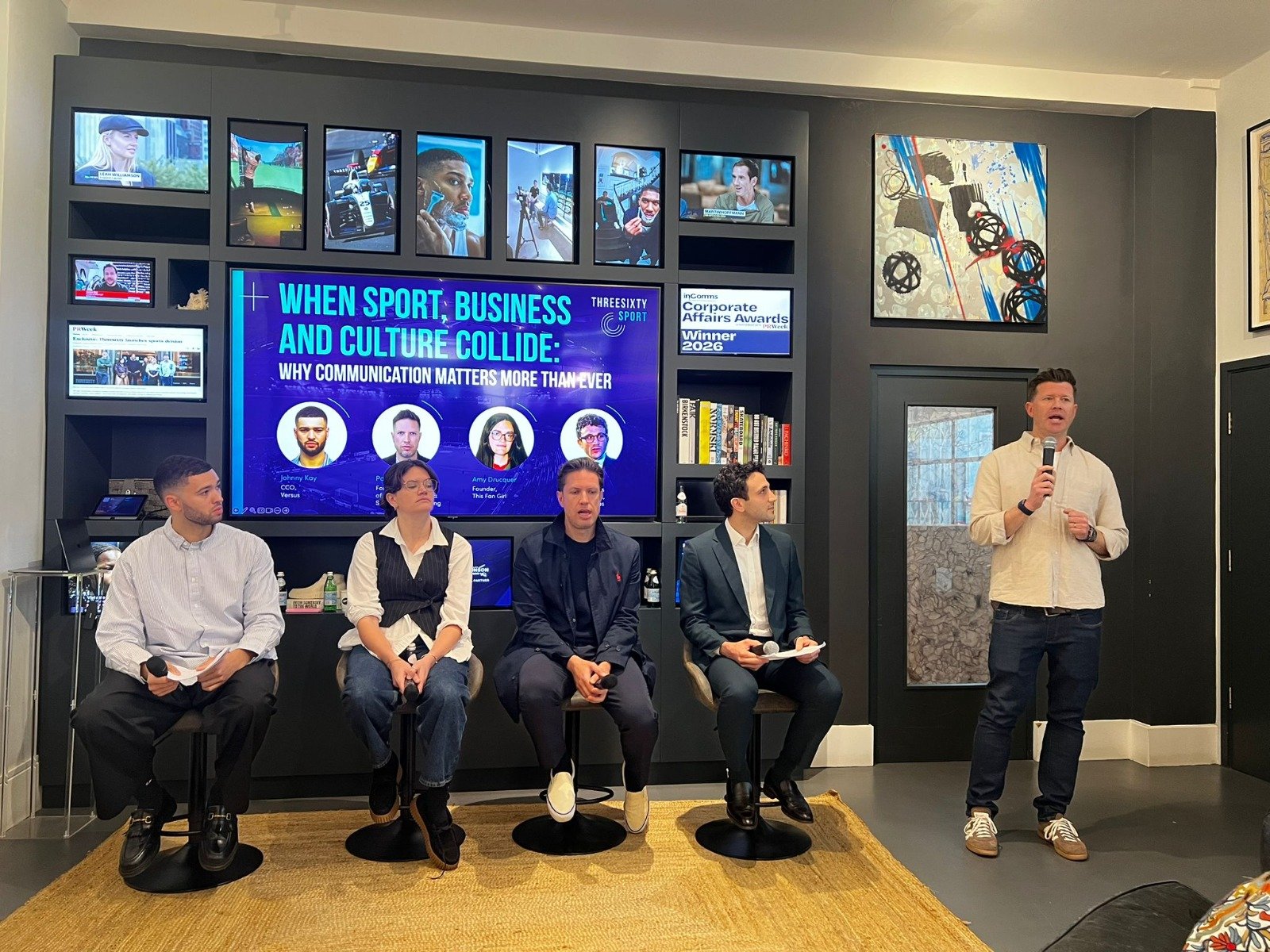
We recently attended a panel discussion hosted by Johnny Kay, Chief Commercial Officer at sports and culture media platform Versus, as part of the launch of 360 Sport, a new specialist division from Three Sixty focused on the growing intersection between sport, business and culture. The conversation brought together voices from across media, fan communities, elite sport and communications to explore how modern sport is being reshaped by commercialisation, social media, global audiences and cultural relevance.
The panel featured Paul Smith, formerly Director of Communications and Social at Red Bull Racing, Amy Drucquer, founder of football community platform This Fan Girl, and Sam Agini, Sports Business Correspondent at the Financial Times. Together, they unpacked some of the biggest pressures and opportunities facing sport right now, from authenticity and fan culture to reputation management, global growth and the changing role of communications.
One of the clearest themes throughout the discussion was that sport is no longer controlled solely by clubs, federations or broadcasters. Influence of the narrative and message - and as such what makes a brand - has become fragmented across fans, players, creators, brands and online communities. As Paul Smith explained, “gone are the days of just issuing a press release and hoping it sticks”. Everyone now has an audience and everyone has a voice.
That shift has fundamentally altered the way sport operates culturally. Amy Drucquer reflected on how football analysis and conversation were once largely driven by traditional broadcasters and punditry. Today, fan media, creator culture and social conversation shape huge parts of the narrative. Communities form around clubs, fashion, politics, music and identity just as much as around the action on the pitch itself.
Examples can already be seen across football culture. The rise of creator figures such as Mark Goldbridge has changed how fans consume and react to the game, while players themselves increasingly shape narratives directly through social media. The backlash to Roberto De Zerbi’s comments about Mason Greenwood, alongside the online reaction surrounding Mo Salah and Arne Slot, shows how quickly fan opinion, player influence and digital conversation now collide to shape the public story around sport.
The panel argued this democratisation has brought genuine positives. Sport has become more accessible to people who historically may not have felt represented or welcomed within traditional fan culture. Women’s football was highlighted repeatedly as an example of how long-term investment and authentic community building can create lasting cultural relevance. Amy pointed to Arsenal Women as a model of authenticity built over decades rather than through short-term marketing exercises.
But alongside that expansion has come growing commercial pressure. A major focus of the conversation was the tension between authenticity and monetisation. Modern sport is now deeply intertwined with sponsorships, luxury collaborations, streaming platforms, creator partnerships and global audience strategies. Clubs and governing bodies are under constant pressure to increase revenue, broaden audiences and remain culturally relevant at the same time.
That balancing act is becoming increasingly difficult. The discussion touched on everything from expensive merchandise drops to overseas fixtures and the globalisation of leagues. One example that resonated strongly was the idea that football clubs are now trying to serve entirely different audiences simultaneously. Traditional local supporters may simply want affordable tickets and a strong matchday atmosphere, while younger global audiences might engage with clubs through fashion collaborations, social media personalities or lifestyle culture.
As Sam Agini pointed out, there is now a constant tension between preserving local identity and chasing international growth. Global fanbases create enormous commercial opportunities, but they also reshape what clubs become culturally. The panel discussed how leagues such as the NFL and NBA have embraced global expansion successfully, while football still faces more resistance because of its deeper ties to local identity and tradition.
Formula One emerged as another key example of sport’s cultural transformation. Paul Smith reflected on the impact of Netflix’s Drive to Survive, which dramatically expanded F1’s audience and shifted it further into mainstream entertainment culture. The series helped attract younger fans, new sponsors and significantly larger commercial investment, but it also created divisions between long-standing fans and newer audiences entering the sport through entertainment rather than racing itself.
That idea of “old fans versus new fans” became another recurring theme throughout the morning. The panel repeatedly returned to the challenge facing sports organisations trying to evolve without alienating their core supporters. Paul described the difficulty of serving audiences who consume sport in entirely different ways. Younger fans increasingly follow clips, creators and social narratives rather than full matches, while traditional audiences still value rituals, stadium culture and long-form viewing experiences.
This changing media environment has also intensified reputational risk. Sam Agini explained how social media has created an almost permanent state of scrutiny around sport. Every decision, ownership change, sponsorship deal or governance issue can rapidly become a wider cultural conversation. The speed and emotional intensity of online discourse means even relatively small issues can escalate quickly into major reputational moments.
However, the panel agreed that scrutiny itself is not necessarily negative. Paul Smith argued that transparency, speed and honesty remain the most effective ways to navigate crises. Attempts to avoid difficult conversations or hide behind silence often create more reputational damage than the original issue itself. At the same time, there was acknowledgement that not every cultural conversation requires a response. Organisations increasingly need to understand when to contribute meaningfully and when to step back.
The conversation also explored how communications and marketing are becoming increasingly interconnected. Traditional distinctions between PR, marketing, content and social media no longer really reflect how audiences consume information. Instead, successful sports brands are operating across multiple channels simultaneously, combining earned media, creators, experiential activity and fan communities into a single ecosystem.
Importantly, several speakers suggested that brands are beginning to move away from judging success purely through reach metrics. Amy Drucquer argued that audiences are becoming fatigued by endless low-quality content optimised purely for algorithms. Instead, there is growing value in quality, trust, legitimacy and community - the things that build connection.
That shift may become even more important as AI-generated content continues flooding digital platforms. Both Amy and Johnny Kay highlighted the increasing importance of real-world experiences, communities and cultural credibility in an environment where online content is becoming harder to trust or differentiate. A packed event, a loyal community or genuine fan advocacy may ultimately hold more long-term value than millions of passive impressions.
Sport today sits at the centre of culture, media, entertainment and commerce in a way it never has before. That creates extraordinary opportunities for growth, creativity and inclusion. But it also creates pressure - to commercialise, to globalise, to constantly remain culturally relevant.
The challenge for modern sports organisations is not simply how to grow audiences or generate revenue. It is how to do so without losing the authenticity, identity and emotional connection that made fans care in the first place.