Luke Littler needs protection, not a personality transplant
By David Alexander, CIPR Sports Committee Chairman
At 16, Luke Littler reached the PDC World Championship final on his debut, capturing the imagination of the public.
A year later he won the title and, at 19, he’s the world number one, a multi-millionaire and the owner of almost every important trophy in darts.
Sponsorships and television appearances have followed, while tournaments sell tickets because he has made the sport feel young and relevant.
Inevitably, though, admiration has been joined by resentment.
Just like Michael van Gerwen before him, Littler has faced the more unsavoury side of success, booed by crowds who want to amp up the pantomime.
Darts depends on noise, theatre and the impression that the crowd is participating rather than merely watching.
Booing a favourite’s opponent is part of that atmosphere but some of the antics Littler has had to cope with, such as whistling while he’ss throwing, sustained personal abuse and behaviour serious enough for a referee to stop play, are something else.
At the World Series Finals in Amsterdam, Littler subsequently suggested that he might stop playing in the Netherlands, saying there was little point travelling simply to be booed.
That’s not the same as threatening to quit darts, although Samuel Gill of DartsNews.com told BBC Sport there was a genuine fear that he might eventually walk away if the hostility continued.
That possibility should concern the Professional Darts Corporation (PDC) given that Littler has expanded the sport’s audience, profile and commercial value to an extent few players have achieved. If he decided in a few years that he had earned enough money and no longer enjoyed competing, darts would lose its biggest attraction.
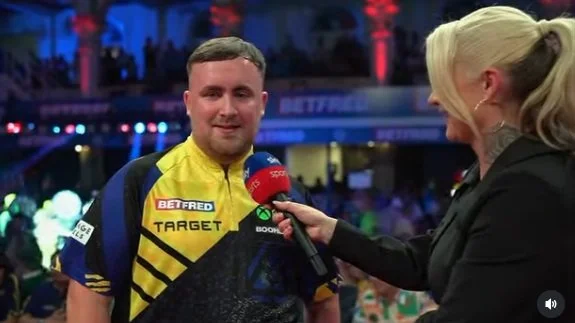
The temptation will be to confront crowds and answer online critics.
That might feel satisfying, but it would also give his detractors the reaction they want. Each argument risks turning a teenager who transformed darts into a millionaire apparently complaining about the people whose tickets fund the sport.
Littler should retain his personality because darts would be poorer if media training turned him into a collection of polite clichés. He can celebrate, respond to the atmosphere and show the confidence that helped make him the biggest name in the sport.
While heat of the moment interviews in the cauldron of a venue can prompt unguarded responses, Littler would be wise to avoid announcing boycotts immediately after matches and allow his management and the PDC to address unacceptable behaviour.
A calm statement would draw the right boundary: booing before and after play is part of professional sport, but deliberate attempts to disrupt a throw and personal abuse are not. The governing body must enforce its standards, remove persistent offenders and ensure referees intervene consistently.
Littler should also protect himself away from the stage through careful scheduling, professional psychological support and less exposure to social media abuse.
He doesn’t need every spectator to love him. Being the player everybody wants to beat is evidence of what he has achieved already.
The challenge he faces now is learning to accept the pantomime without tolerating abuse, while the PDC must remember that its most valuable asset is still only a teenager.
Littler should not be asked to become less successful or less interesting to make crowds behave.
Darts wanted a superstar and found one and now it has a responsibility to look after him.